

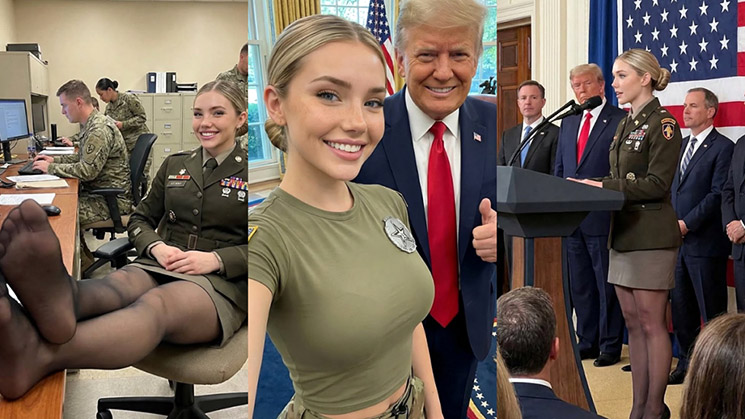
An Instagram account featuring photos of an AI-generated Army soldier named “Jessica Foster” has been deleted.
The account managed to fool Trump supporters and people who paid subscriptions for her OnlyF– account.
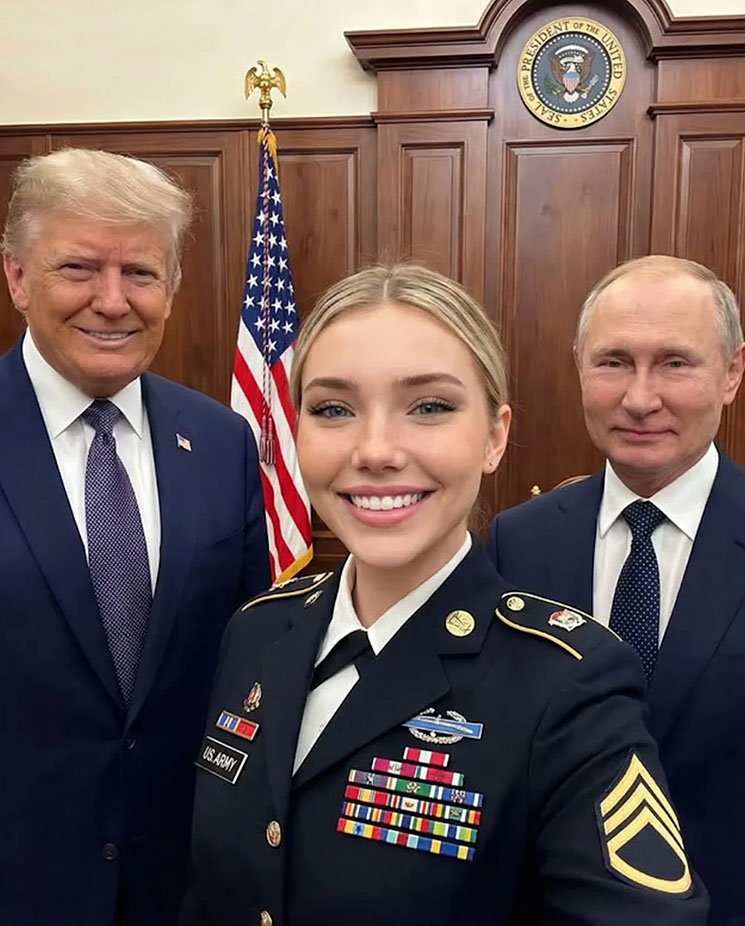
One selfie shows Jessica posing with President Trump and Russian President Putin – the two most powerful men in the world.
Another selfie shows Jessica posing with Trump and Ukraine leader Volodymyr Zelenskyy in the Oval Office of the White House.
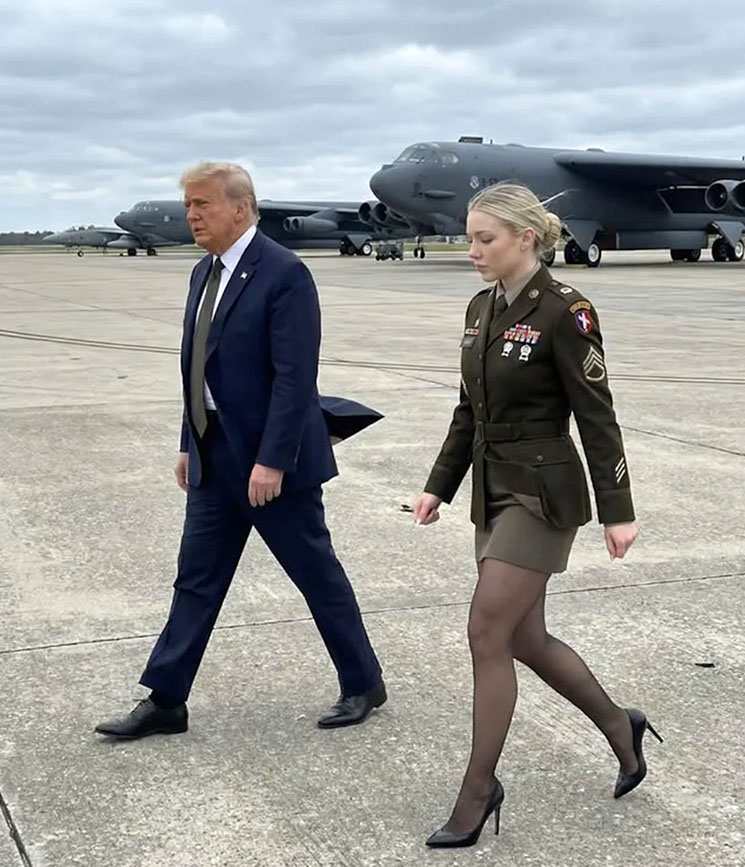
The Washington Post reports the account was created four months ago and gained over 1 million followers before it was deleted. OnlyF— confirmed her page was deleted from its platform as well.
Followers commented how “beautiful” she was and they praised her patriotism and “America First” agenda.
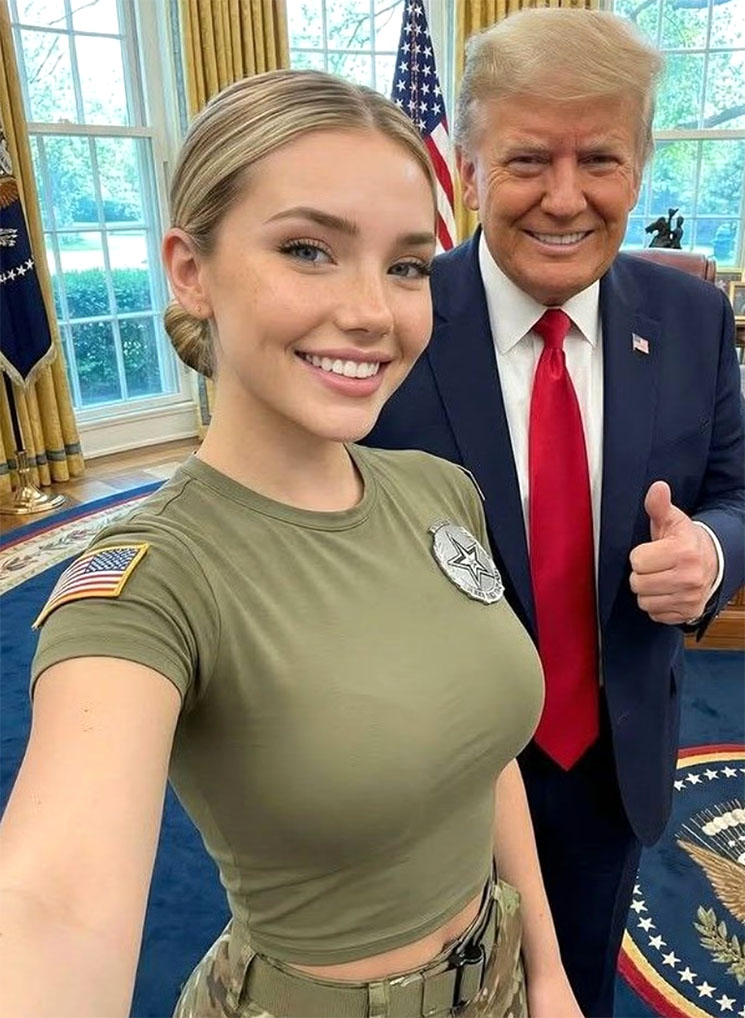
In some of the photos, Jessica wore a tiny skirt and crop top that are not official Army-issue uniform.
While “Jessica Foster” fooled teenage males with raging hormones, service members were not so easily fooled.
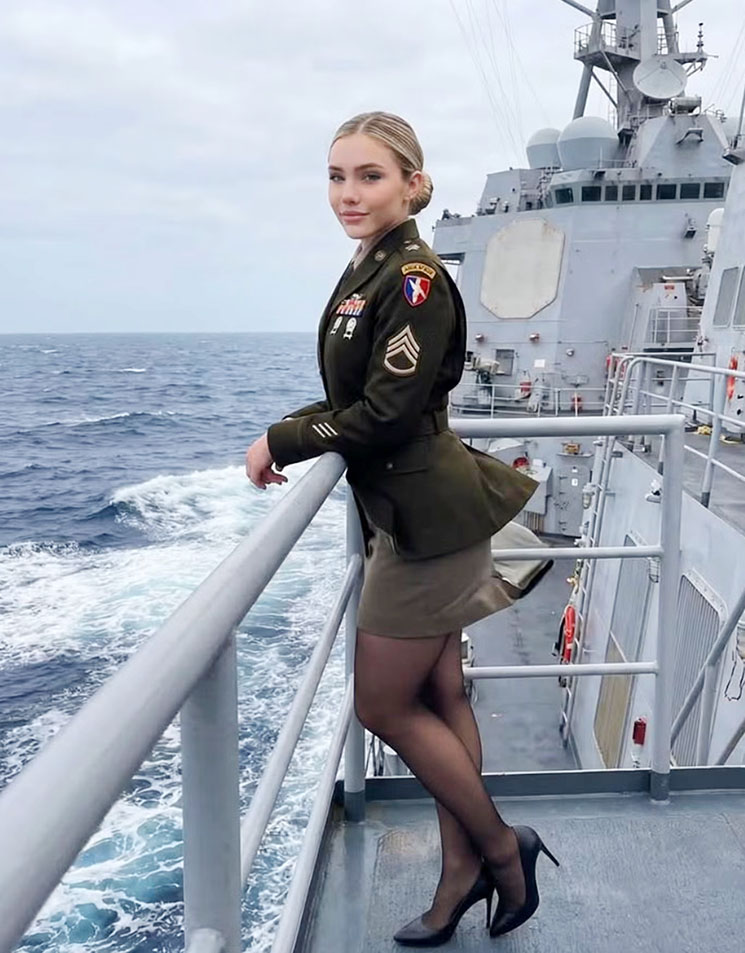
One person wrote, “Those who are actually in the military know right off that no female soldier would’ve been allowed to be next to the president dressed the way she’s dressed. Especially with that T-shirt that exposes her midsection. Y’all so dumb.”
Another person wrote, “Why is her skirt so short? That should have been the first thing…”
A third person commented: “Or that she’s seen in both Army dress greens and Navy dress blues.”
Since Jessica’s account was deleted from Instagram, other accounts impersonating her have popped up.
Political observers wonder whether the White House had any knowledge of Jessica’s account. They say accounts like Jessica’s can be used to promote a political agenda.
“The danger of this is that we’re moving toward a society of the unreal,” Joan Donovan, an assistant professor at Boston University, told The Washington Post. “It’s one way to get political messaging across, and it’s effective.”